
Last updated November 14, 2026
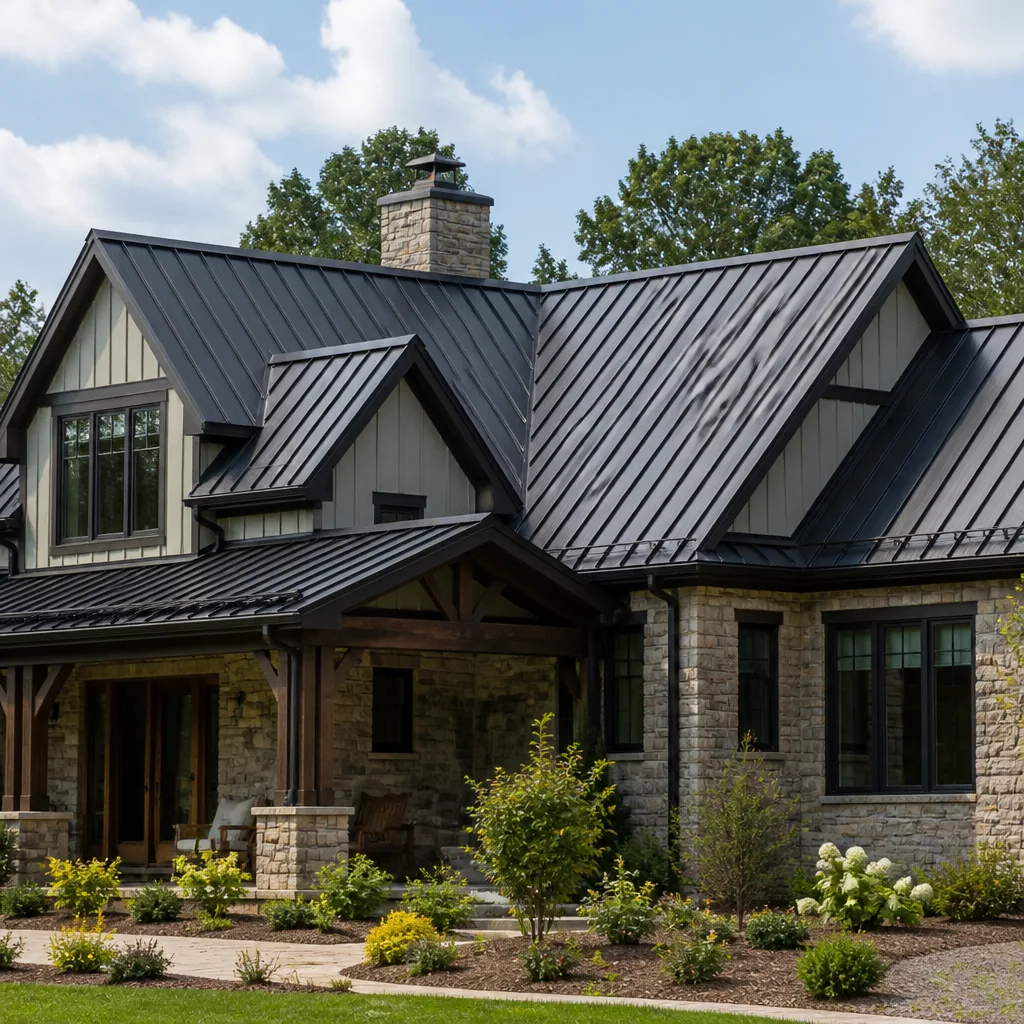 Metal roofing
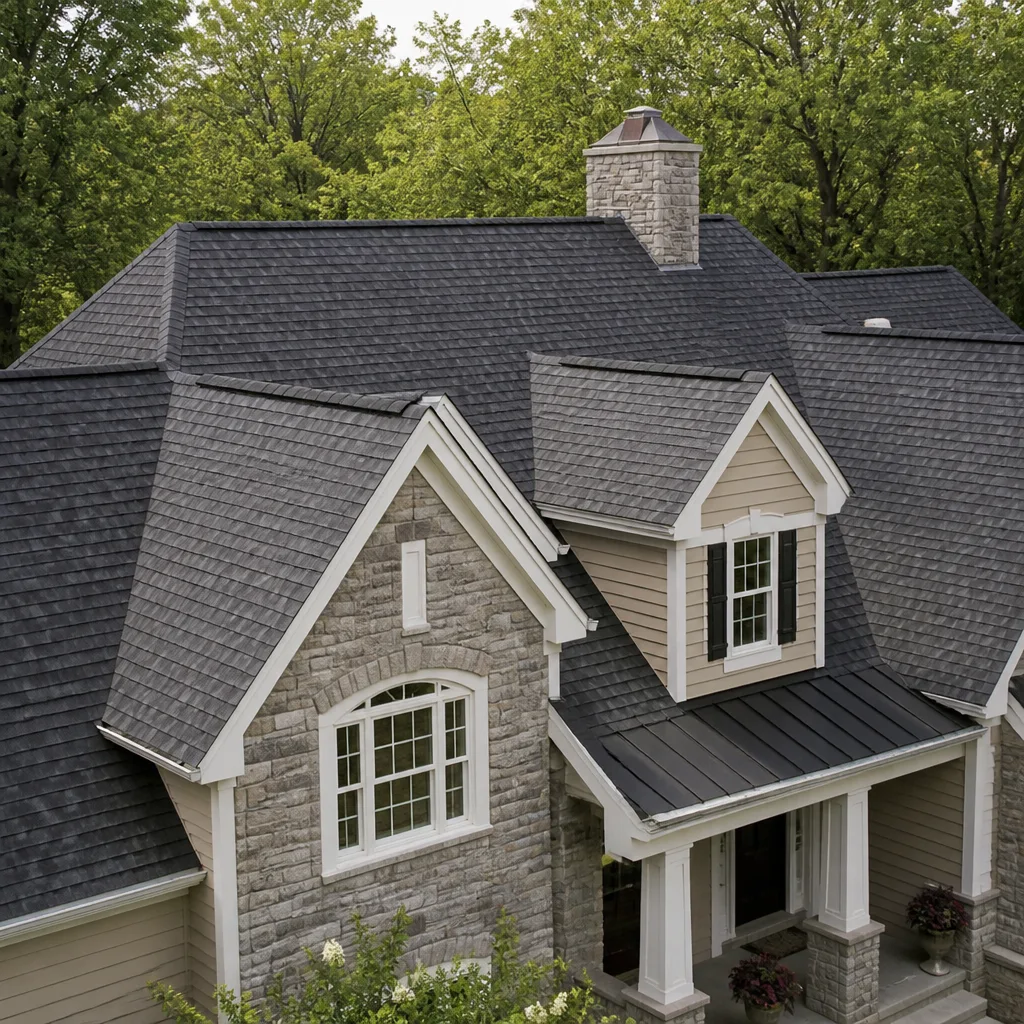 Architectural shingles
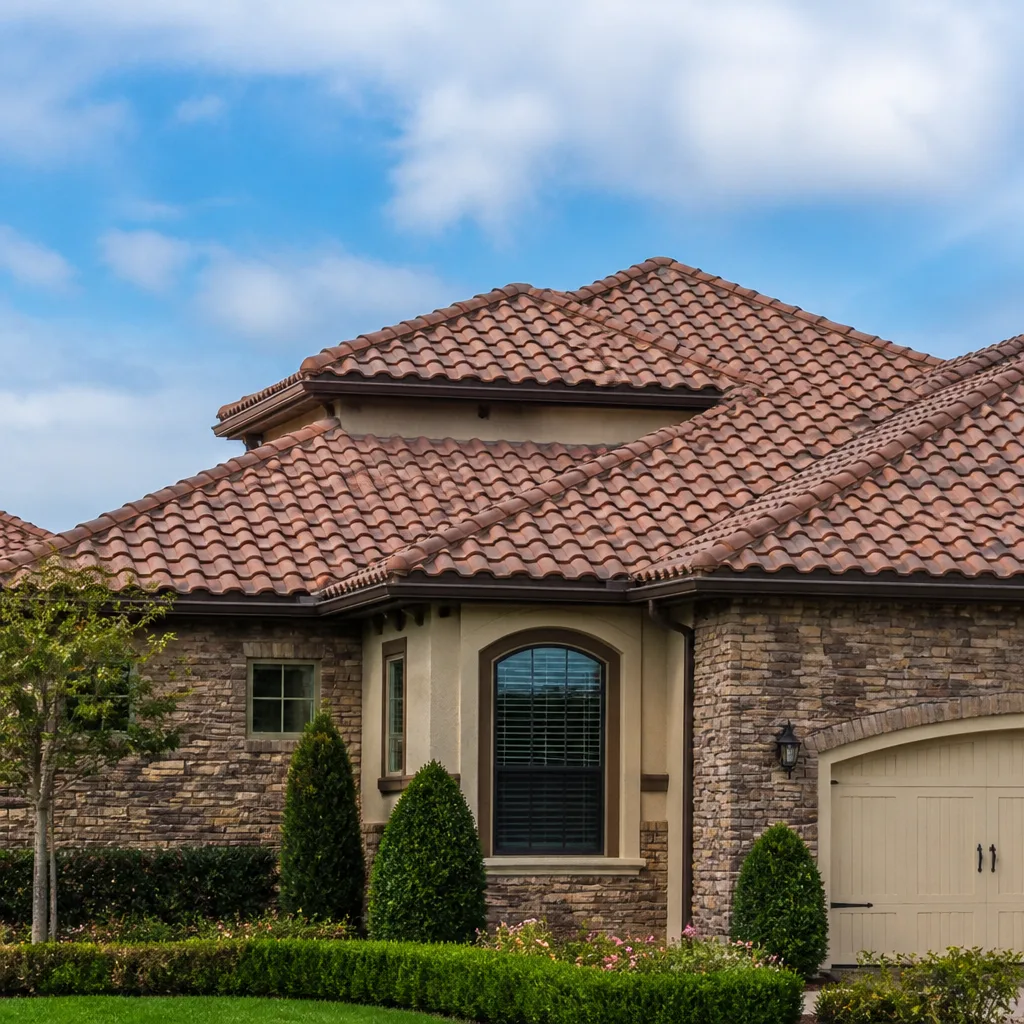 Tile roofing
 GAF
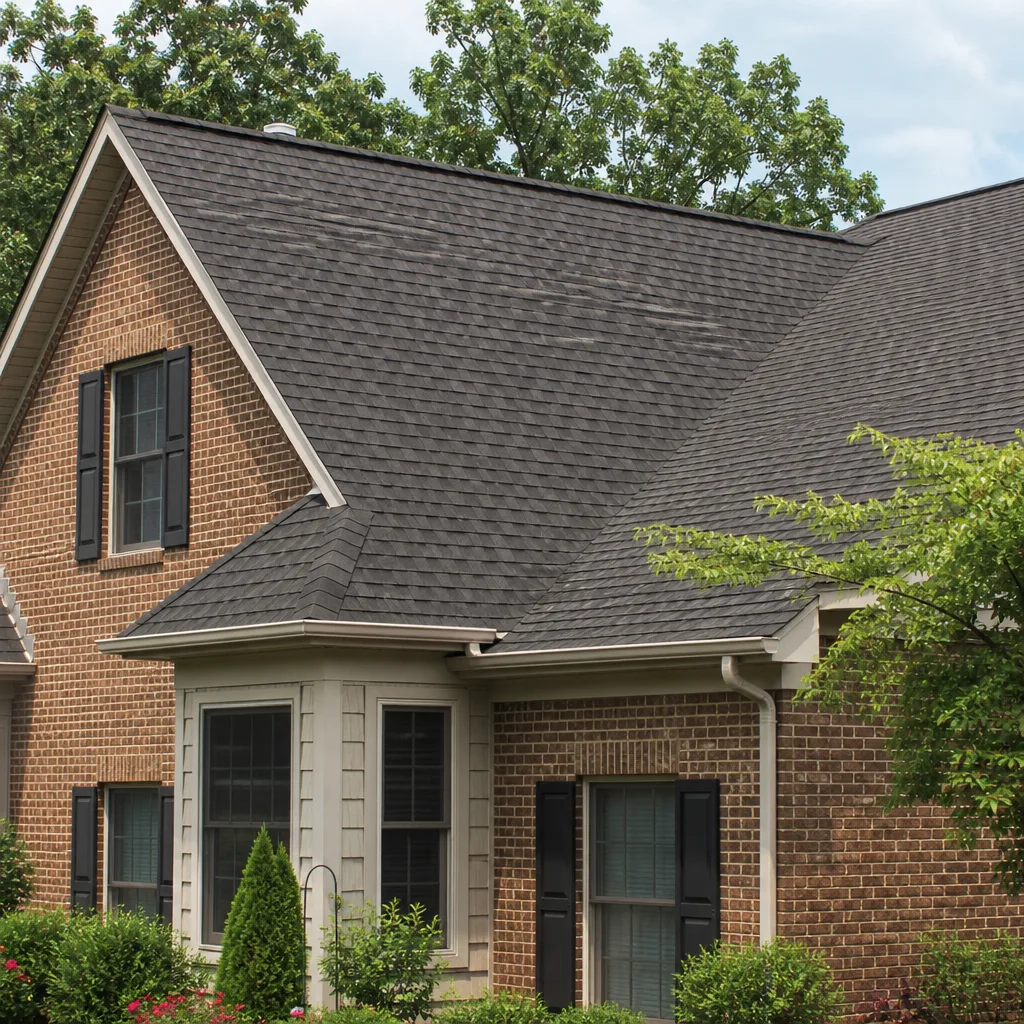 Owens Corning
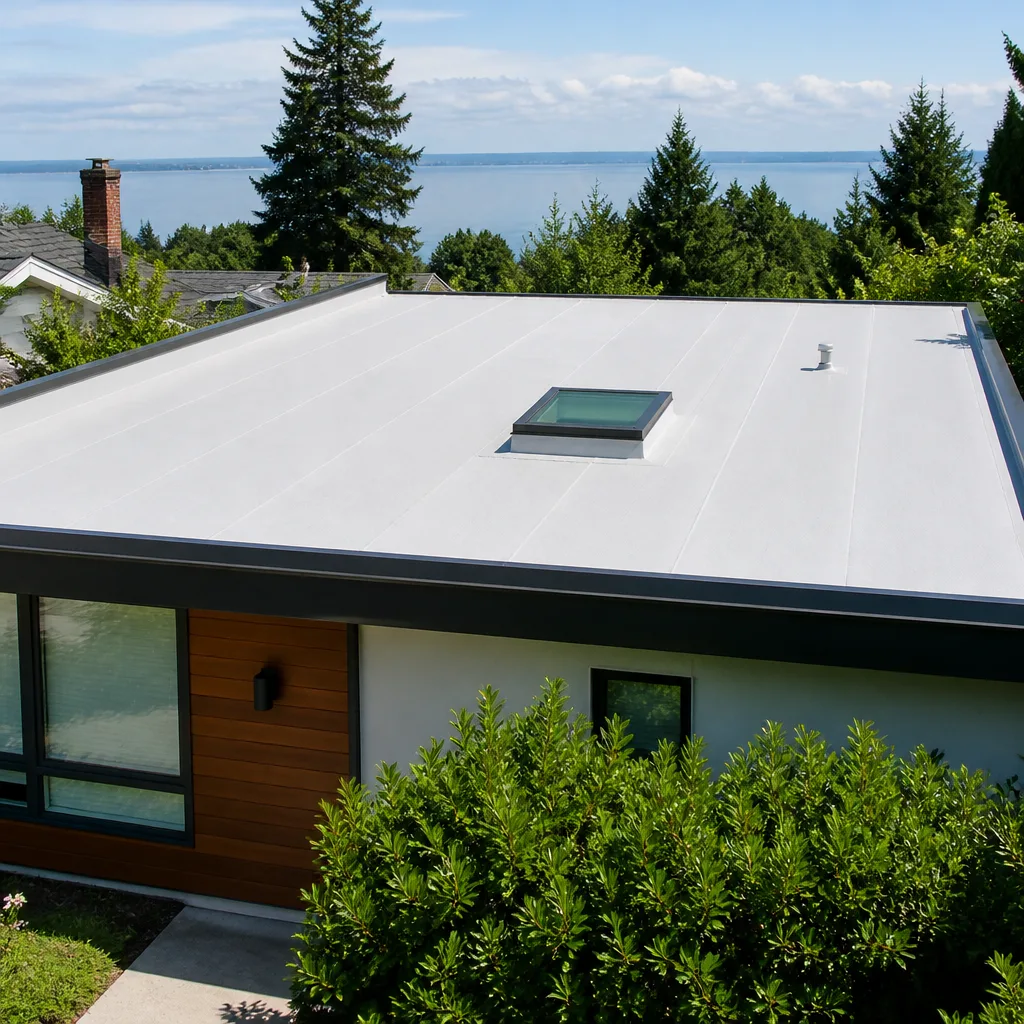 Flat & low-slope
Free roof inspection with deck photos before we talk money - GAF and Owens Corning certified installation
How to Hire a Roofing Contractor in Yonkers: A Step-by-Step Guide
A contractor can be fully licensed, carry proper insurance, and still be the wrong hire for your roof. That surprises homeowners who assume credentials are the whole test. Licensing tells you someone cleared a minimum threshold. It does not tell you whether they have ever worked on a 1940s Dutch colonial with a low-slope porch addition, or whether they know what a Yonkers permit actually requires before a shingle comes off. This guide walks through how to verify credentials, what to ask that separates a real local roofer from a wanderer, and how to read an estimate line by line. You’ll finish knowing exactly what to look for before you sign in Yonkers.
Quick Answer
Hiring a roofing contractor in Yonkers means checking three things in order: verify the contractor’s license and insurance independently (not from a business card), ask questions that test whether they know Yonkers housing stock and permit rules, and compare itemized written estimates rather than single lump sums. A contractor who passes all three is worth considering. One who dodges any of them is not, no matter how good the price looks.
Styles & brands we work with
- Architectural shingles
- Metal roofing
- Tile roofing
- GAF
- Owens Corning
- Flat & low-slope
Table of Contents
- Step 1: Verify License and Insurance
- Step 2: Ask the Five Questions That Reveal Local Knowledge
- Step 3: Read the Estimate Line by Line
- Why Permits Matter in Yonkers
- Red Flags Specific to the Yonkers Market
- Why Brand Independence Helps You
- The Case for a Standalone Inspection First
- Common Mistakes to Avoid
- When to Call a Professional
Step 1: Verify License and Insurance
New York State does not license roofing contractors at the state level. That single fact trips up a lot of homeowners who assume a state license exists and that any contractor who mentions one has it. Licensing in Yonkers and Westchester County runs through local channels, and the specific requirements depend on where the contractor is registered and what work they’re doing. Because the rules are local and layered, the right move is to ask your contractor which license they hold, then confirm it with the issuing municipality yourself. Never accept a photocopy or a verbal yes as verification.
Insurance deserves the same treatment. Roofing is high-risk work, and a contractor without proper coverage exposes you to liability if a worker is injured on your property. Ask for a certificate of insurance that names general liability and workers’ compensation coverage, then call the insurer listed on it to confirm the policy is active. Certificates can be forged or expired. A phone call takes minutes and closes that gap.
Here’s what to collect before you hire:
- Their local license number or registration. Write it down and confirm it with the issuing city or county office. If they can’t produce one, ask why.
- A current certificate of insurance. General liability and workers’ comp should both be listed. Call the insurer to verify the policy is live.
- A physical business address. A contractor operating out of a PO box or a vehicle is harder to hold accountable after the job ends.
- A written contract with the scope spelled out. Verbal agreements don’t hold up when a dispute starts.
This is the floor of the process, not the finish line. A contractor who clears every credential check can still be a bad fit, which is why the interview questions below matter just as much. If you want to see how a company handles inspection, repair, and replacement under one roof, Ashton Roof Repair covers all three phases.
Step 2: Ask the Five Questions That Reveal Local Knowledge
The interview is where you separate a roofer who has worked Yonkers roofs from one who drove up from somewhere else after a storm. General answers to general questions mean nothing. Ask questions that only someone with real local experience can answer with specifics. Listen for details, not for reassurances.
1. “What’s the permit process here, and who pulls it?” A knowledgeable contractor will tell you the permit comes from the city and that they handle it, not you. Push further: ask how long permits typically take and whether that timeline changes during busy seasons. If they shrug and say permits aren’t usually needed for roofing, be skeptical.
2. “What do you usually find under roofs in this part of Yonkers?” Homes in neighborhoods like Park Hill, Crestwood, and the Getty Square area span a wide range of ages. A local roofer will talk about the deck conditions they commonly encounter, whether they find original sheathing, and how that affects the price. Vague answers here are a sign they haven’t been in many local attics.
3. “Have you worked on homes with low-slope porch additions or flat sections?” Many Yonkers houses have mixed roof types. A contractor who only does steep-slope shingle work may not be equipped for a flat porch roof or a low-slope section that needs a different system.
4. “What’s your approach on a historic property?” Yonkers has historic districts where exterior work gets a closer look. Ask whether they’ve dealt with review requirements for roof changes and how they handle it. A contractor who has never navigated that process is likely to leave you holding the timeline.
5. “What brands do you install, and why?” A contractor locked into one supplier will recommend that supplier’s product for every roof. One who works across several brands can explain why GAF fits one roof and CertainTeed fits another. That flexibility matters when you’re comparing materials.
These five questions don’t require a technical background to ask, but they do require specific answers. The way a contractor responds tells you more than any brochure.
Step 3: Read the Estimate Line by Line
A legitimate roofing estimate is itemized, not a lump sum. It separates labor from materials, names the products, and specifies what happens to the old roof. A single number on a page tells you nothing about how the job will actually run. Here’s what a complete estimate should contain:
- Tear-off and disposal. How many layers are coming off, and who pays for the dumpster.
- Deck inspection and repair allowance. A per-sheet price for replacing damaged sheathing, disclosed upfront.
- Underlayment type. Named specifically, not described as “standard.”
- Shingle brand and product line. Not just “architectural shingles” but the actual manufacturer and model.
- Flashing replacement. Chimney, vent, and valley flashing, listed as new or reused.
- Ridge and starter. These are separate components and should be line items.
- Ventilation. Whether existing vents are reused or replaced, and how the intake is handled.
- Permit cost and who pulls it. If it’s buried in “miscellaneous,” ask why.
- Cleanup and magnetic sweep. Nail pickup should be stated, not assumed.
- Warranty terms. Manufacturer warranty and workmanship warranty, listed separately.
What’s missing from an estimate tells you as much as what’s in it. If there’s no deck repair allowance, you’ll likely get a surprise change order once the old roof is off. If shingle brand isn’t named, you may not get the product you assumed. Most contractors will hand you two or three estimates to compare. Compare the line items, not the totals. The lowest total with vague line items is rarely the cheapest job in the end.
Every estimate should be free and in writing. Any contractor who wants to charge you for a quote, or who hands you a number scribbled on the back of a business card, is telling you how they operate. For a closer look at what a full replacement involves, see our guide to roof replacement.
Why Permits Matter in Yonkers
A roofing permit is not a bureaucratic formality. It triggers an inspection that confirms the work meets code, and it protects you if you sell the house and a buyer’s inspector asks whether the roof was done to standard. A contractor who offers to skip the permit is offering to do work that may not pass inspection and to leave you with records that don’t match the house.
Most cities require a permit for anything beyond minor repairs, and Yonkers follows that pattern. The rules are handled by the city’s buildings department, and the details can change. The point is to confirm with your contractor that they handle the permit application and final inspection as part of the job, not as an extra. Ask this question before work starts, not after.
Here’s how a permitted job should flow:
- The contractor files the permit application with the city and includes the cost in the estimate.
- Work proceeds according to the permit scope, with no hidden additions.
- The contractor schedules the final inspection with the city.
- Documentation of the passed inspection goes to you, not just to the contractor.
Ask to see the final inspection paperwork at completion. If a contractor can’t produce it, the job isn’t finished. If you’re in a part of the city with historic review requirements, the process adds a step, and you want a contractor who has been through it before.
Red Flags Specific to the Yonkers Market
Westchester County gets its share of contractors who show up after a weather event, knock on doors, and offer a discount if you sign today. They are the biggest single risk in this market. Storm chasers tend to have out-of-state plates, temporary local phone numbers, and a sense of urgency that real contractors never create. Once they leave town, warranty claims go nowhere.
Here are the signs that should end the conversation:
- Pressure to sign today. A legitimate contractor doesn’t need to manufacture urgency. If they’re pushing you to commit before you’ve read the estimate, that’s a sales tactic.
- An out-of-state license plate and no local address. Not automatically disqualifying, but combined with pressure tactics, it’s a pattern.
- An offer to “handle the insurance for you.” A responsible contractor can work with your insurer on documentation, but nobody should be managing your claim on your behalf while also billing you.
- Door-knocking after a storm with a “today only” price. Weather events bring this out in every market, and Yonkers has seen it after storms. The roofing work will still need doing next week. There’s no reason the price should only hold until sundown.
- No written contract. If they won’t put it in writing, they won’t stand behind it in writing either.
- Cash-only payment structure with large upfront deposits. Ask for a payment schedule tied to job milestones, not to a single wire transfer before work starts.
You can check a contractor’s complaint history through the county’s consumer protection office or the state’s consumer protection resources before you sign. It takes ten minutes and surfaces the pattern. Reputable companies should come back clean.
Why Brand Independence Helps You
Many roofing companies are locked into a single supplier, either by contract, by dealer program incentives, or by their stocking arrangements. That’s not automatically bad, but it does shape every recommendation they make. If a contractor only installs GAF, they’ll tell you GAF is the right product for every roof. They may even believe it. The question is whether the recommendation is driven by what fits your roof or by what’s on the truck.
A contractor who works across several brands can compare honestly. GAF and CertainTeed and Owens Corning all make excellent products, and they sometimes differ in ways that matter for a particular roof type, a budget, or a specific performance need. A contractor who works across all three can tell you where the tradeoffs are. That’s useful. It’s also harder to find than you’d expect.
Here’s what to ask:
- “What other brands do you install, and what would you recommend if I wanted to compare alternatives?” If the answer is only one name, ask why. If they can’t articulate the reason, it’s probably a supplier relationship, not a product reason.
- “What’s the price difference between your premium and value lines?” A brand-independent contractor can give you real comparisons across price tiers.
- “What would you put on your own roof?” The answer tells you something about their actual recommendations versus the product they stock most.
Working across brands is a bargaining position as much as a product-quality position. It means the contractor isn’t stuck. A roofer who installs GAF, CertainTeed, Owens Corning, and others can show you what a premium shingle gets you over a value one, and let you decide whether the difference is worth it. That’s a more honest conversation than one where the answer was settled before you walked in the door.
The Case for a Standalone Inspection First
Not every roof problem requires a replacement, and not every replacement quote is honest. If a contractor’s business model is built around replacement sales, their inspection is likely to find a reason for replacement regardless of actual condition. The solution is to get an inspection that stands on its own, separate from any repair purchase requirement.
Some companies offer inspection as a standalone service, which means you get a written assessment of condition without a sales pitch attached. That’s worth looking for. An honest inspection answers specific questions: How much useful life is left in the shingles? Are there soft spots in the deck? Is the flashing intact where it should be? What’s the actual condition of the attic ventilation? These are factual questions, and the answers don’t change based on what the contractor wants to sell you.
An inspection gives you three paths:
- Monitor and repair if needed. Roof has more life left than you thought. Fix the specific problem and revisit in a few years.
- Repair. Localized damage, no evidence of widespread failure. A repair is the right call.
- Replace. The roof is genuinely at end of life or the damage is widespread enough that repair isn’t cost-effective.
Getting an inspection first lets you choose the path with real information. If you’ve noticed a leak or missing shingles, an inspection tells you whether it’s a summer repair or a fall replacement. For repairs specifically, our roof repair page covers what to expect.
Common Mistakes to Avoid
- Hiring the first bidder without comparison. Get at least three itemized written estimates, even if the first contractor seems trustworthy. A single estimate gives you nothing to compare it to.
- Choosing on price alone. The lowest bid is often low because it omits deck repair allowances, uses cheaper underlayment, or skips the permit. Compare line items, not just totals.
- Skipping the insurance verification call. A paper certificate that looks official can be expired or forged. The insurer will tell you in minutes if the policy is real.
- Accepting “we’ll pull the permit after work starts.” Permits should be part of the estimate and filed before work begins. Retroactive permitting is a red flag.
- Ignoring the warranty details. Manufacturer warranties vary significantly. Know which warranty applies to the product and whether the workmanship warranty covers the installation.
- Assuming a general contractor covers roofing. Roofing is a specialist trade. A general contractor may coordinate a roof job, but the roofing work should be done by a roofing contractor.
- Not asking about disposal. Who pays for the dumpster, how many layers come off, and where the waste goes are all real costs. They should be in the estimate.
When to Call a Professional
Some problems are worth a call right away: active leaks, visible sagging in the roof deck, missing or visibly damaged shingles, granule loss that leaves the surface looking bare, or any sign of moisture in the attic after rain. Storm damage is another trigger. If a tree limb or wind event has changed the shape of the roof, don’t wait to see if it gets worse.
Some problems can wait a few days: a minor drip in a ceiling during a heavy rain, or a small area of wear that isn’t growing. But “waiting” should be a few days, not a season. A small roof problem has a way of becoming a deck problem once water gets under the shingles.
Ashton Roof Repair offers free estimates in Yonkers. Call (833) 741-8977. We answer 24/7. Fast dispatch from 7am to 7pm, Sunday through Friday. We’ve worked across Yonkers for 14 years, and we know what local roofs look like under the surface. An honest inspection comes first. A recommendation comes second.
See the difference
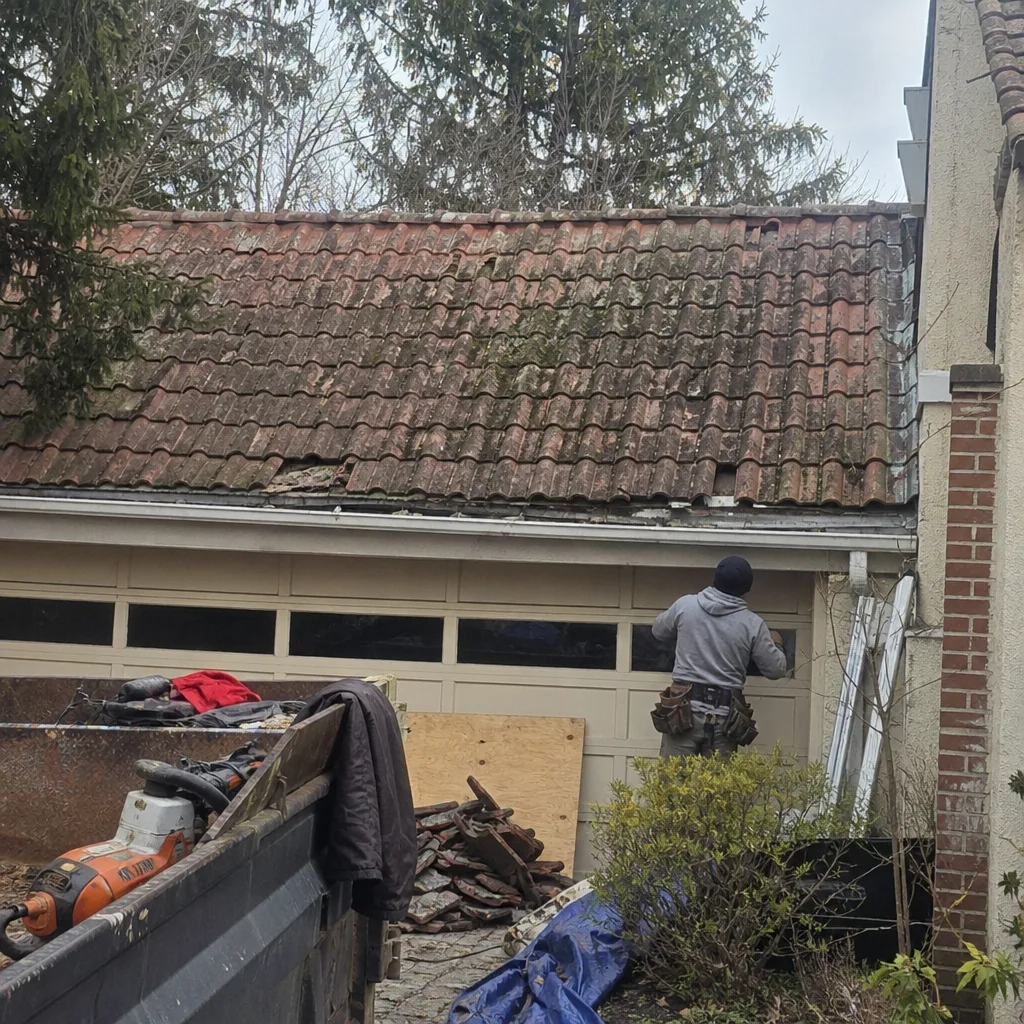 Before
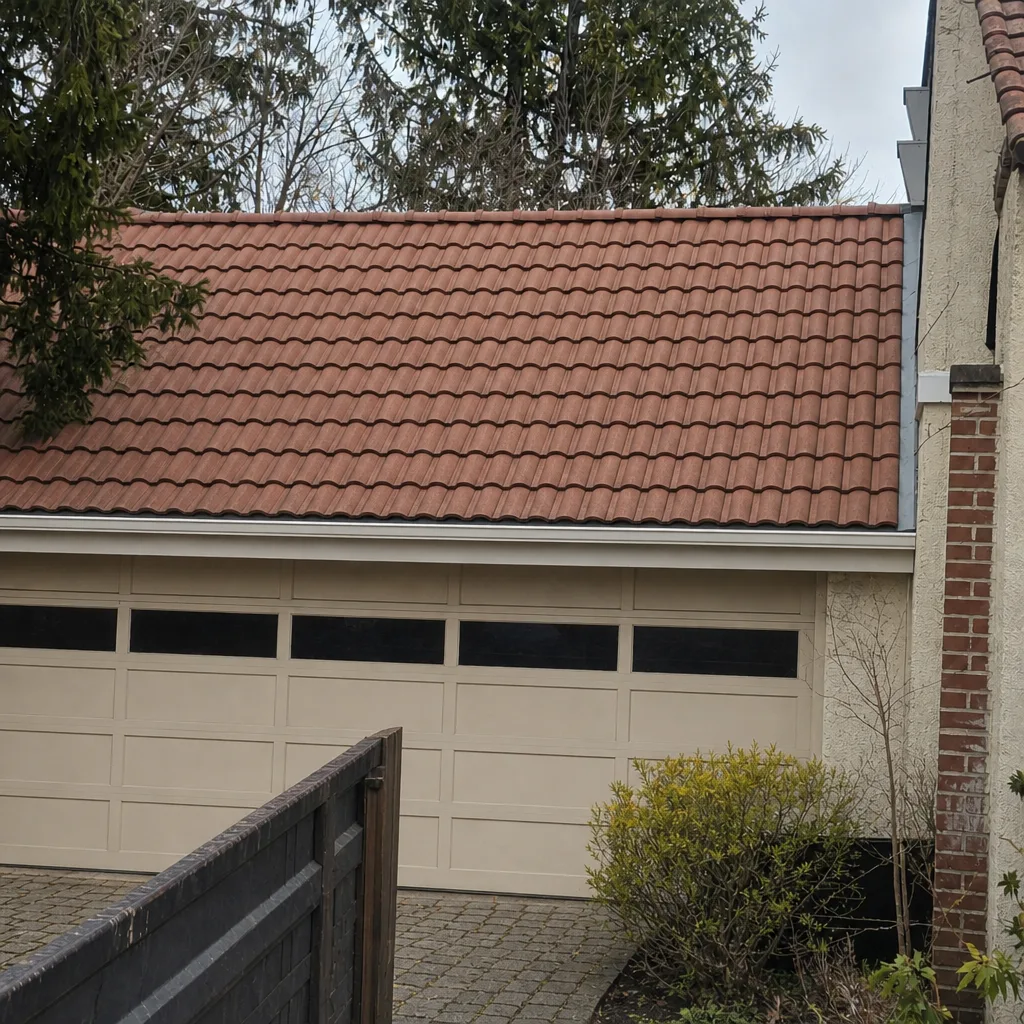 After
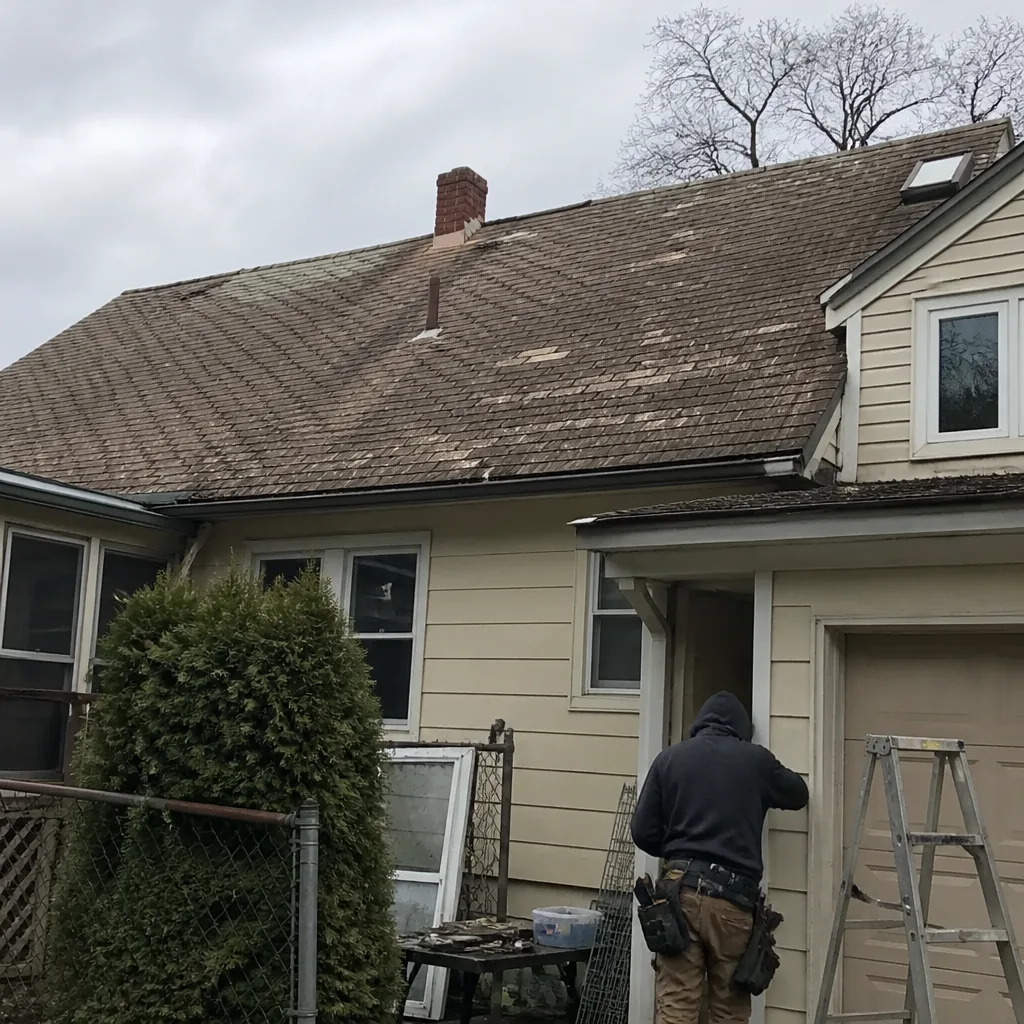 Before
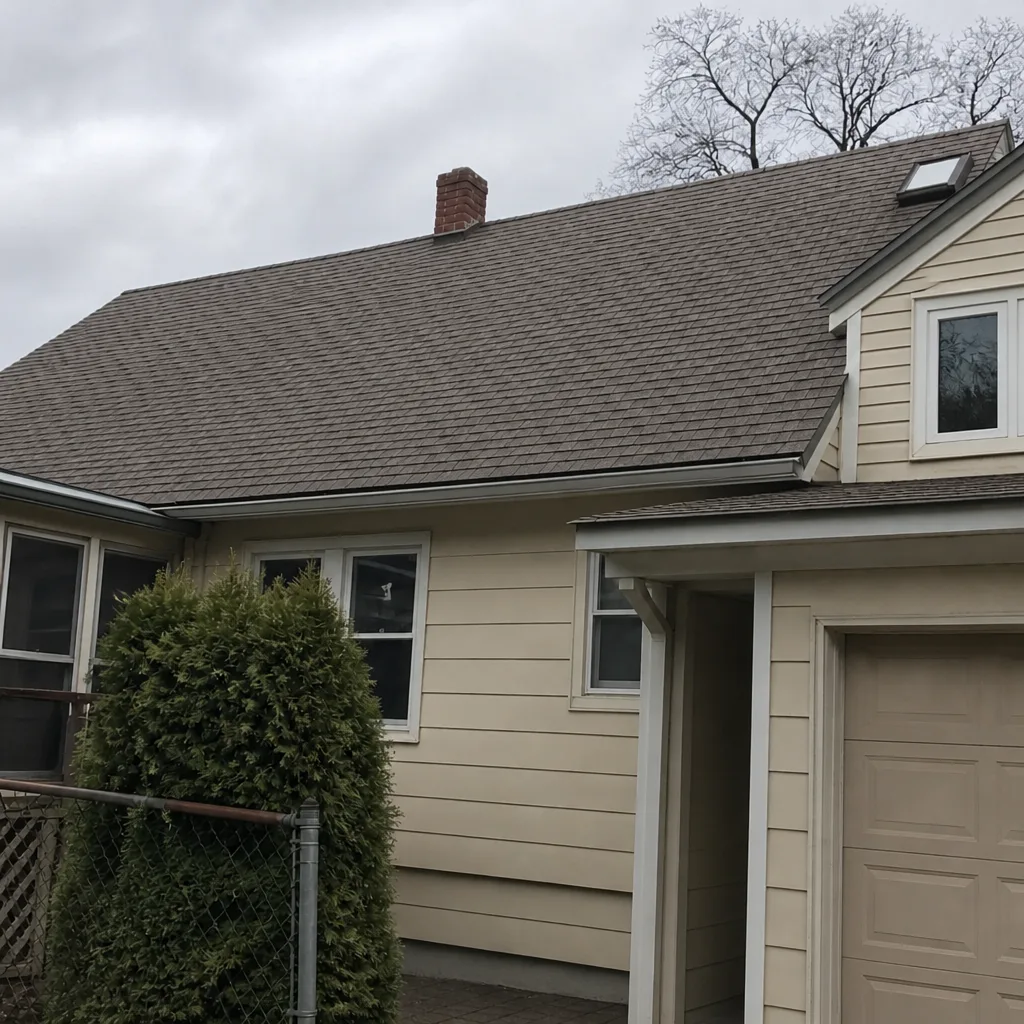 After
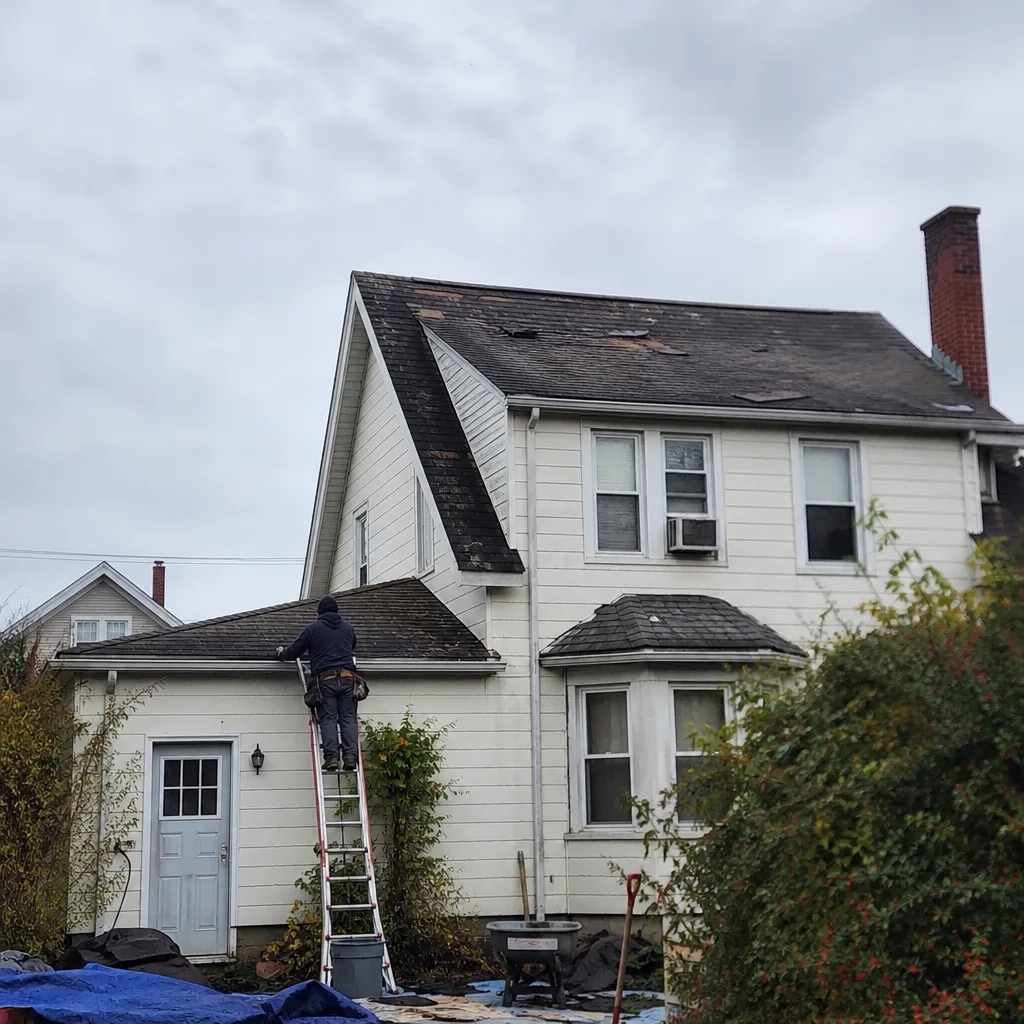 Before
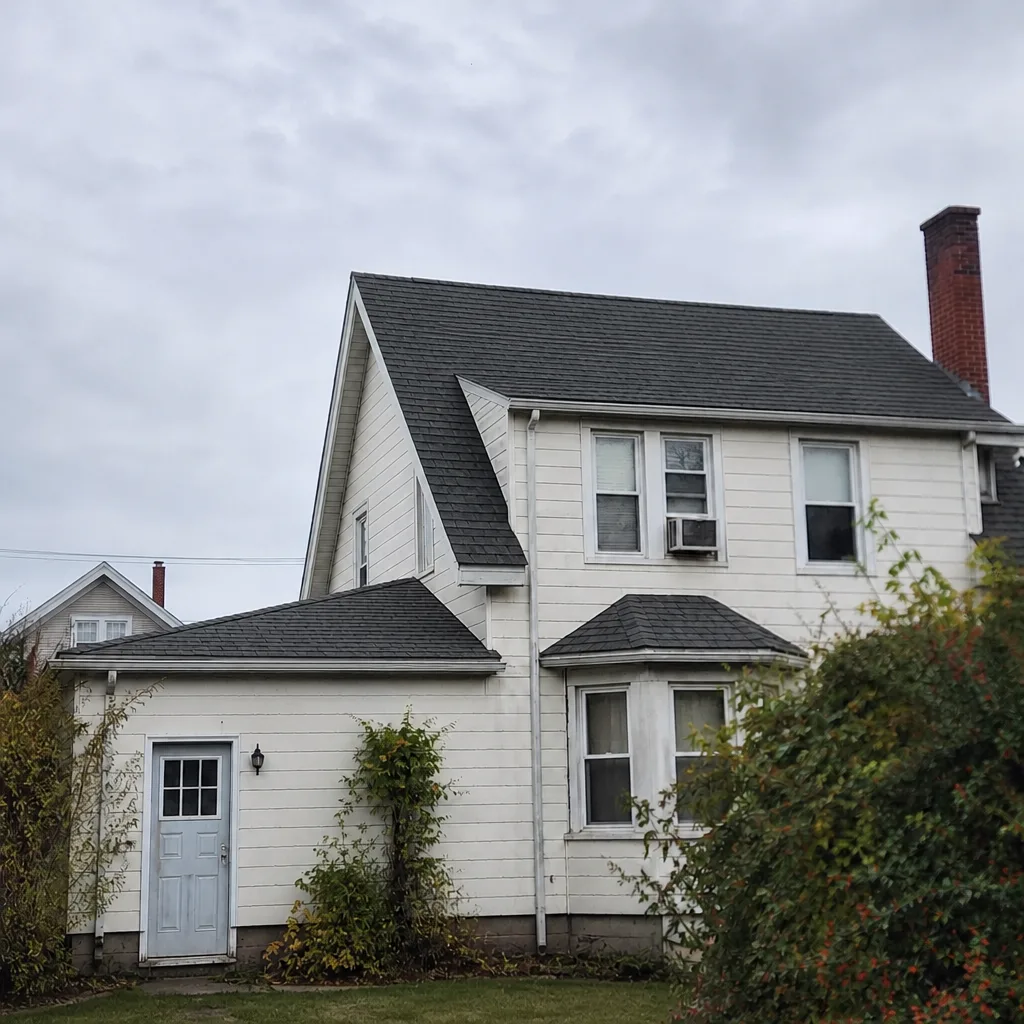 After
Frequently Asked Questions
New York does not license roofing contractors at the state level, so verification happens through the local municipality or county where the contractor holds registration. Ask the contractor to provide their license or registration number, then call the issuing office yourself to confirm it. Don’t accept a photocopy or verbal confirmation as proof. Repeating this step with their insurance company closes the other half of the credential check.
No. The lowest total is often low because it leaves out deck repair allowances, uses a cheaper underlayment, or skips the permit. Compare itemized line items across at least three estimates. A slightly higher bid with a full scope spelled out is usually the better value over the life of the roof. An estimate that omits what’s underneath the shingles is a bid for a different job than the one you need.
A complete estimate lists tear-off and disposal, deck inspection with a per-sheet repair allowance, underlayment type, shingle brand and product line, new flashing, ridge and starter, ventilation, permit cost, cleanup, and both warranty terms. If any of these is missing, ask for it in writing before you sign. A line-item estimate is the contractor’s commitment, and a lump sum is not.
That’s exactly what a standalone inspection answers. If the damage is localized and the surrounding shingles have useful life left, a repair usually makes sense. If the deck is soft over large areas, if multiple areas have failed at once, or if the roof is at end of life, replacement is the better call. Getting an inspection without a repair purchase requirement keeps that call honest. Call (833) 741-8977 for a free estimate.
Storm chasers typically show up after weather events with out-of-state plates, temporary local phone numbers, and a sense of urgency that legitimate contractors don’t create. They may push you to sign today for a “storm discount” and offer to manage your insurance claim on your behalf. The work may look fine initially and fail within a season or two, at which point the warranty is unenforceable because the company has left the market. Verify every contractor’s local license, insurance, and physical address before you hire.
It matters for the honesty of the recommendation. A contractor locked into one supplier recommends that supplier’s product for every roof, whether or not it’s the right fit. One who installs across brands like GAF, CertainTeed, and Owens Corning can tell you where the tradeoffs are and let you compare price tiers. That means the material fits your roof, not the contractor’s inventory.
The Bottom Line
Hiring a roofer in Yonkers is a verification process, not a gut decision. Check the license and insurance independently. Ask questions that only a contractor with real local experience can answer. Read the estimate line by line and compare at least three. Look for storm chaser warning signs in the local market and give more weight to an itemized bid than to a low lump sum. A contractor who works across multiple brands, handles permits as part of the job, and will do a standalone inspection without pressure is worth the time it takes to find. The right hire is the one who can explain their recommendation, not just price it.
Ashton Roof Repair serves homeowners across Yonkers and holds certified fluency across seven leading roofing manufacturers, including GAF, CertainTeed, Owens Corning, IKO, Atlas, Tamko, and Boral. That means we compare materials honestly, because the recommendation is based on fit, not on supplier relationships. If you want an inspection first, we’ll do that without requiring a repair purchase. From the first shingle to a full tear-off, one company, one point of contact.
Call (833) 741-8977 to schedule your free estimate. We answer 24/7. Fast dispatch from 7am to 7pm, Sunday through Friday.
Written by the team at Ashton Roof Repair, serving Yonkers since 2012.