
Last updated November 14, 2026
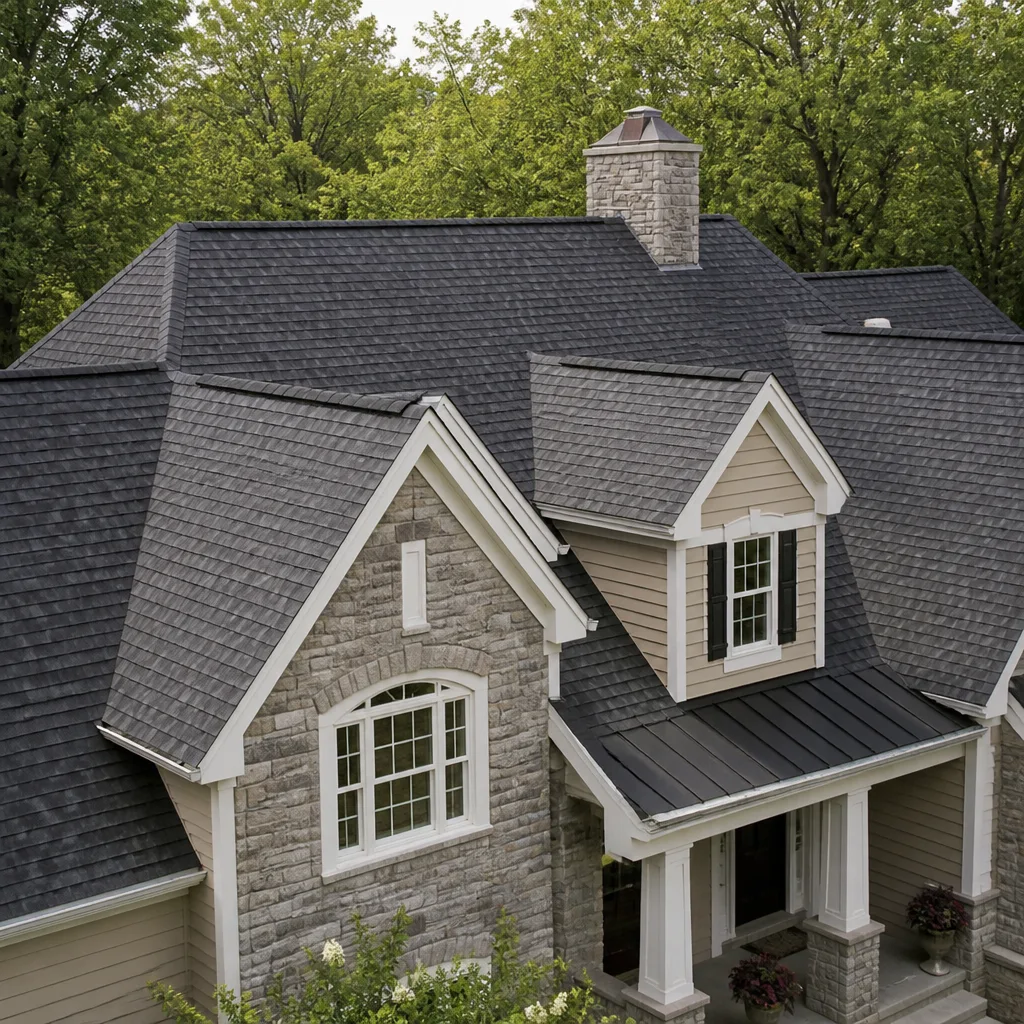 Architectural shingles
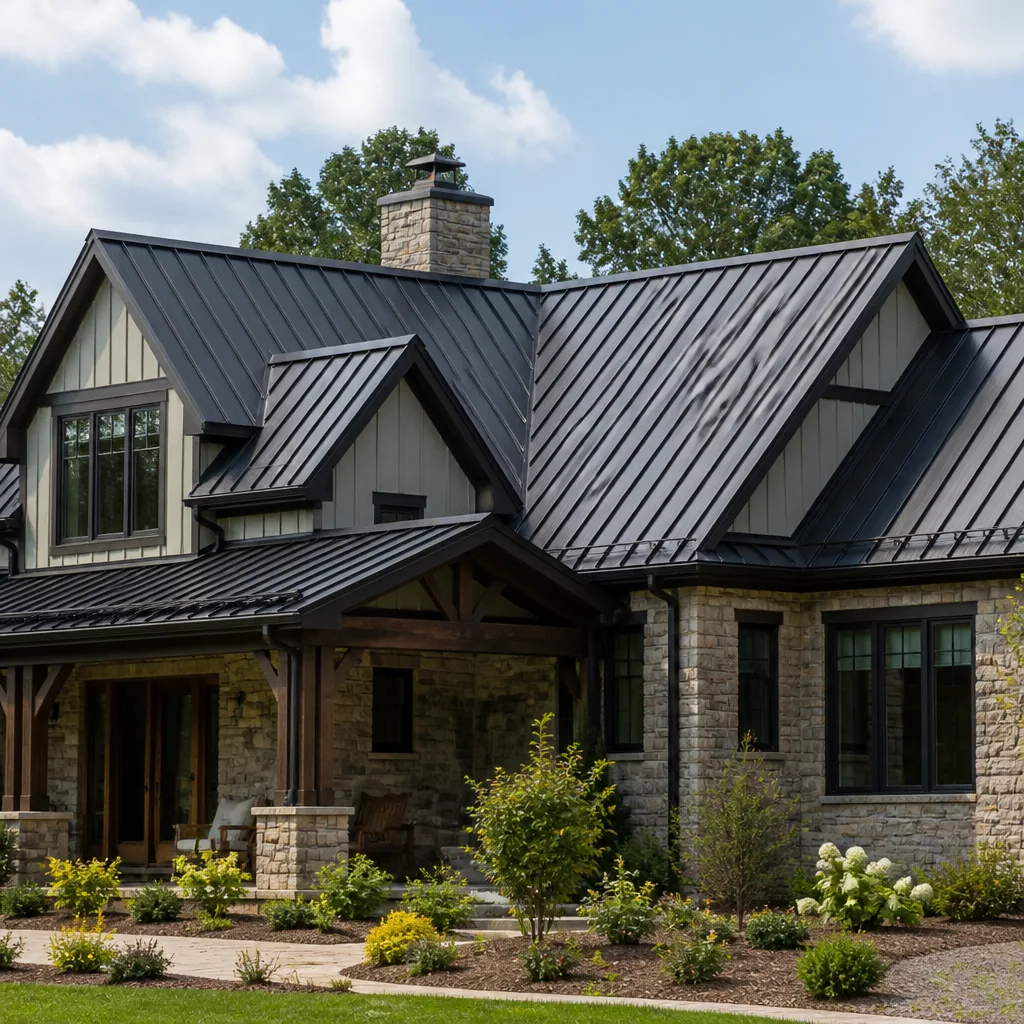 Metal roofing
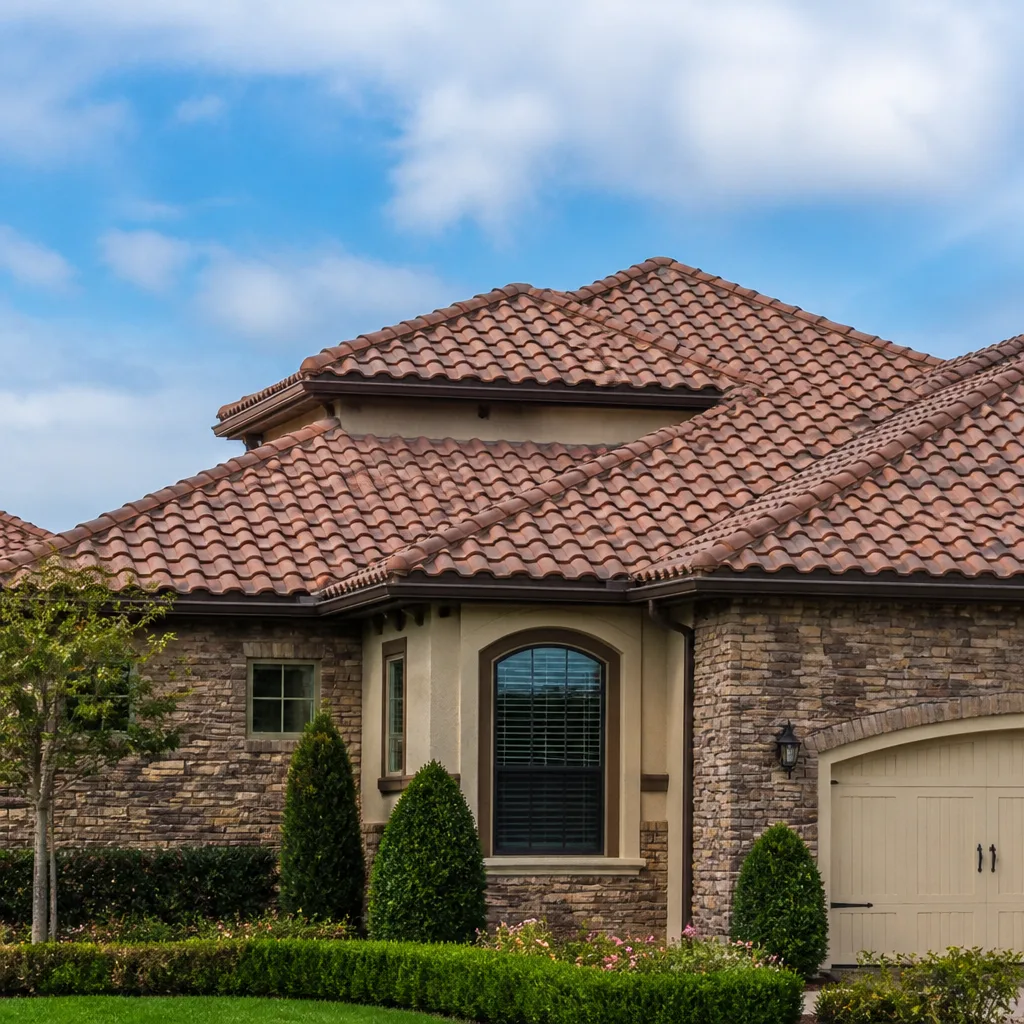 Tile roofing
 GAF
 Owens Corning
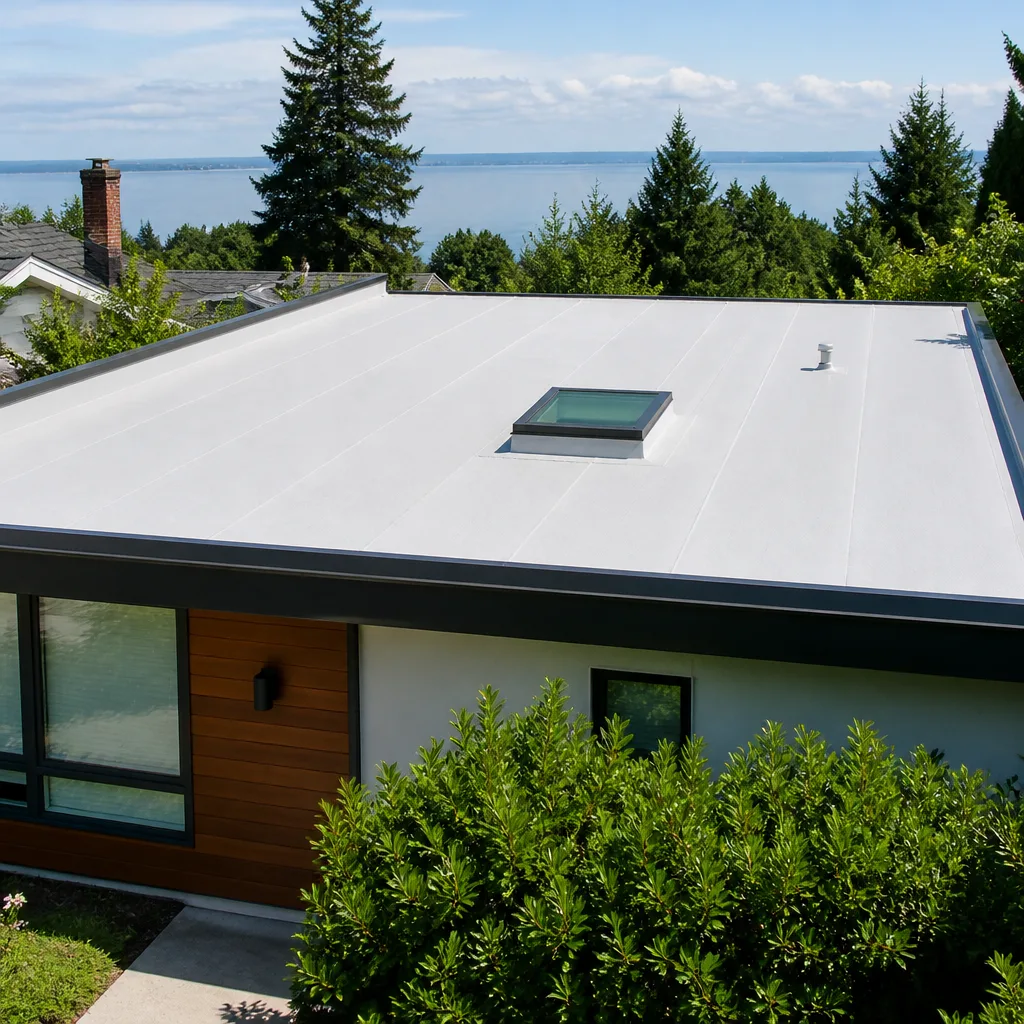 Flat & low-slope
Free roof inspection with deck photos before we talk money - GAF and Owens Corning certified installation
Roof Repair Maintenance Checklist for Yonkers Homeowners
The expensive roof repairs we see in Yonkers rarely start with a dramatic storm. They start with a task that got done in the wrong order, done badly, or skipped entirely because a checklist never explained why it mattered. Cleaning a gutter without checking the flashing above it, for example, or sealing a stain on the ceiling without asking where the water entered. This guide walks through roof maintenance as a sequence, organized around Yonkers’ actual stress seasons and the housing stock you find here, so you can catch small problems before they turn into big ones. We’ll also draw a clear line between what you can safely check yourself and what belongs with a contractor.
Quick Answer
A useful roof maintenance checklist for a Yonkers home runs in three phases: pre-winter prep, mid-season checks after heavy snow and freeze-thaw cycles, and spring recovery. The homeowner-safe tasks are visual only – checking attic for stains, looking for lifted shingles from the ground, clearing debris from valleys. Anything involving the roof surface itself, flashing repair, or anything above a single story should go to a licensed roofer. An honest inspection first, a recommendation second, is how maintenance stays inexpensive.
Styles & brands we work with
- Architectural shingles
- Metal roofing
- Tile roofing
- GAF
- Owens Corning
- Flat & low-slope
Table of Contents
- Why Yonkers Roofs Fail Differently
- The Three-Phase Yonkers Roof Calendar
- Homeowner-Safe Tasks (and Their Exact Limits)
- Tasks That Require a Contractor
- Row Houses and Attached Colonials: The Shared-Wall Problem
- Warning Signs a Repair Is Masking a Bigger Problem
- Documenting Roof Condition Year Over Year
- How to Know When Repair Stops Making Sense
Why Yonkers Roofs Fail Differently
Yonkers sits in a climate pattern that produces more roof stress per year than most of the country. The city gets snow, then a thaw, then a freeze again within days. That cycle matters because water melts into a shingle seam or a flashing detail during the warm hours and refreezes overnight. Ice expands. Repeat that cycle a dozen times in a single winter and you have mechanical damage that a warmer city never sees.
The housing stock magnifies it. In neighborhoods like Park Hill, Ludlow, and the dense blocks south of Getty Square, narrow lots and steep pitches mean snow sits on the north-facing slope longer than it would on a wider suburban roof. Attached houses in Yonkers share walls and drainage paths with neighbors, so one clogged downspout can affect two households. The 2012-era storm history and the leaf-heavy tree canopy in parts of the city compound things further – debris in valleys traps moisture and accelerates shingle granule loss.
What this means for maintenance is that a flat annual checklist, borrowed from a national roofing site, doesn’t fit. The timing and order of tasks matter more than the length of the list. Below is the sequence we actually recommend to Yonkers homeowners.
The Three-Phase Yonkers Roof Calendar
Break the year into three phases, each with a specific purpose. Doing the right task at the wrong time is one of the most common ways money gets spent twice on the same problem.
Phase 1 – Before the first deep freeze (late fall). The goal here is to remove what winter will turn into damage. Clear leaves from valleys and behind chimneys. Confirm every downspout flows freely. Check that no shingle tabs are loose enough to lift under snow load. Book an inspection if the roof is more than about fifteen years old, and definitely if you’ve never had one.
Phase 2 – After the worst storms, mid-winter. This is a visual check, done from indoors and from the ground. After heavy snow, stand back and look for ice damming along the eaves, sagging in the roofline, and interior ceiling stains. Do not walk the roof in freezing conditions – the shingle surface is slick, and the risk is not worth the information.
Phase 3 – Spring recovery. This is when the damage shows. Look for lifted or curled shingles, granule accumulation at the base of the downspouts, and any new interior staining that appeared over the winter. Spring is also the right time for the annual professional inspection, because the evidence from the whole winter is now visible.
Homeowner-Safe Tasks (and Their Exact Limits)
The line between “safe to check” and “call a professional” is genuinely simple, but a lot of checklists blur it. Here’s the boundary:
- Attic inspection from indoors. Walk the attic with a flashlight. Look for water stains on the underside of the sheathing, daylight at the ridge, or damp insulation. Take photos. This is entirely safe and often the earliest warning sign.
- Ground-level shingle scan. With binoculars from the yard, look for missing shingles, dents, or major curling. You’ll spot gross defects. You won’t spot hairline flashing issues.
- Gutter flow test. Run a hose and check that water leaves the roof system at every downspout. If a piece of a gutter is loose, don’t crawl up a ladder in wind to fix it – note it and call.
- Interior ceiling scan. After each significant storm, walk every room and check ceilings and top-of-wall corners. A faint brown ring is worth documenting with a photo and a date.
- Debris removal from grade level. Clear anything reachable – leaves behind a chimney on a low section, branches on a first-story porch roof. Nothing that involves stepping onto the roof surface.
That’s the safe list. If it involves walking on the roof, climbing past the first story, or working with tools on the roof surface, it’s not a homeowner task. Getting on a wet or icy roof to save a call is how experienced tradespeople get hurt; it’s how an untrained homeowner gets hurt faster.
Tasks That Require a Contractor
There are several categories of roof work where “I’ll just take a look” turns into a fall, an electrical hazard, or a warranty problem. Here’s what should be scheduled with a licensed roofer.
Anything involving flashing. Flashing failures are one of the leading causes of leaks that start small and grow. Properly repairing step flashing at a chimney, valley flashing, or boot flashing around a vent requires lifting shingles and re-laying them so the water sheds correctly. Done wrong, the repair becomes the next leak.
Nail pops and fastener issues. A protruding nail looks like a five-minute fix and usually isn’t. Backing it out without resealing the hole invites water in. A contractor resets and reseals with the right materials, and checks whether the pop signals a fastening failure across the whole field.
Ice dam prevention. Any fix that involves adding ventilation or insulation at the roof deck involves the building envelope, not just the roof surface. It’s a diagnostic job, not a Saturday chore.
Storm damage assessment. If you plan to file an insurance claim, you want a written professional assessment, not your own description. Insurers weigh independent documentation far more heavily.
An Ashton Roof Repair inspection as a standalone service exists precisely for the middle ground between “I don’t know if this is a problem” and “I need a repair.” An honest diagnosis first, then a recommendation. No purchase required to get the inspection.
Row Houses and Attached Colonials: The Shared-Wall Problem
The maintenance checklist for a Yonkers row house or attached colonial differs from a detached suburban roof in three important ways, and most checklists ignore all three.
Drainage doesn’t stop at your property line. In a row of attached homes, the gutter system on the party wall carries water for two households. If your neighbor’s downspout is clogged and yours flows fine, water can back up along the shared run and find its way into your eaves. Checking your half of the drainage is necessary but not sufficient. If you notice a persistent leak along the shared wall, the conversation needs to happen with the neighbor.
Flashing at the party wall is a shared asset and a single point of failure. On a row house, the vertical flashing where roofs meet is one of the most vulnerable details on the whole house, and it’s often the least inspected. A leak into that flashing can show up as a ceiling stain three rooms away from where the water enters. That’s why interior staining location matters so much in attached homes – the source and symptom are almost never in the same place.
Steep pitches and tight lots change the access equation. Row houses in Yonkers frequently have steep roof pitches with limited setback. That means ladder access from a rear courtyard or between buildings may not be possible for a homeowner doing a visual check. In those cases, an inspection from the ground and an annual contractor walkthrough is the practical combination. If your home has a steep pitch and narrow access, we strongly recommend skipping the “look up close” temptation entirely. Contractors have the right equipment for it; homeowners don’t.
Warning Signs a Repair Is Masking a Bigger Problem
Not every repair is what it appears to be. A roofer who fixes a leak by replacing shingles in one spot without asking why that spot failed is patching symptoms. Here are the specific indicators that a repair is hiding something larger – and each one is worth a conversation with an honest contractor.
- Granule loss in an irregular pattern. A certain amount of granule loss is normal aging. When it clusters along one slope, near a valley, or just below a vent, it usually indicates localized UV concentration, poor attic ventilation, or moisture trapped under the mat.
- Nail pops appearing in a cluster. One popped nail is a minor issue. A dozen in a small area means the decking is moving, which means the fastening pattern or the substrate is the problem.
- Interior staining that returns after repair. If a ceiling stain that was patched and painted comes back within a season, the source was never resolved. Water is entering somewhere else and tracking along framing.
- Stains in a location that doesn’t match the roof work. A stain in an interior closet, on an interior wall, or near a fireplace often indicates water traveling through flashing or through a chimney chase – not a direct roof leak above it.
- Shingle curling clustered on one elevation. Curling on the south-facing slope suggests heat and UV exposure. Curling on the north slope suggests moisture and freeze-thaw damage. They call for different solutions.
- Decking soft spots discovered during a repair. Any roofer who finds soft decking during a repair should stop and explain it, not shingle over it. Patching over a soft deck hides the real problem and shortens the life of the repair.
When we look at these signals, the question isn’t “can we fix this spot?” – it’s “what is the spot telling us?” Reviewing the pattern first, then recommending the scope, is how honest repair decisions get made.
Documenting Roof Condition Year Over Year
Most homeowners document their roof reactively, when a leak shows up or insurance is involved. Documenting proactively is worth far more. The reason is that insurers, contractors, and appraisers all read a careful record differently than a verbal memory.
What to photograph: every roof slope from the ground, once each spring. The attic sheathing from the same angles. Any interior stain, with a coin or a ruler next to it for scale. Every storm event where damage might be relevant, taken from the same viewpoint you took the previous year.
What to write down: the date and who took the photo. The outcome of any professional inspection, including the specific repair recommendation and the reasoning. Any roof work performed, with a description of what was replaced. Notes on paint color changes or interior repairs done since the previous year.
Why it matters for insurance: claims are evaluated on whether damage is recent and whether the roof was in reasonable repair. A dated record of the roof’s condition over multiple years supports both points. A homeowner who can show the roof was sound last spring, and that a specific storm caused specific damage, is in a stronger position than one relying on memory.
Why it matters for contractors: when you call a roofer and hand them a folder of annual photos, the diagnosis gets faster and more accurate. A contractor can date a change, see the progression, and give you a recommendation grounded in a trend rather than a single snapshot. When the annual inspection comes around, you have a baseline to compare against.
Beyond roofing, this kind of record is useful for any home sale or insurance renewal. It’s a small habit with an outsized payoff.
How to Know When Repair Stops Making Sense
One question we’re asked often is whether to repair or replace. The honest answer is that it depends on age, condition, and pattern of failures. Here’s how we think it through.
Same spot, repeated repair. If the same area fails three times in as many seasons, the ongoing repair cost starts to exceed the value. That’s the point to talk about roof replacement rather than more patchwork.
Age versus expected service life. The shingle product determines the realistic service life. A quality architectural shingle from a manufacturer like GAF or CertainTeed behaves differently from a value-tier product, and knowing which is on your roof helps the decision. This is where working across multiple manufacturers matters. A contractor locked into one brand can’t give you an honest comparison between the premium and the value option. We install across GAF, CertainTeed, Owens Corning, IKO, Atlas, Tamko, and Boral, so we can show you what each actually gets you at your price point.
The compounding factor. When repairs start crossing categories – flashing here, a soft deck there, a shingle patch over there, all in the same year – the accumulation usually signals the roof as a system has reached end of life.
The straightforward roof repair still makes sense in a lot of cases, especially on a roof with life left in it. Repair when repair makes sense. Replace when it doesn’t. We’ll tell you which.
Common Mistakes to Avoid
- Doing the annual checklist only in spring. Pre-winter work and post-storm checks catch a different class of problem than a spring-only list. Yonkers’ freeze-thaw cycle makes winter checks particularly valuable.
- Repairing a leak without finding the source. It’s tempting to seal and paint and move on. If the leak returns within one season, you paid twice and lost a year of roof life.
- Skipping the party-wall flashing on row houses. This shared detail gets the least attention and creates the most water damage in a dense row of homes.
- Treating gutter cleaning as the whole checklist. Gutters matter, but so do shingle condition, valley debris, flashing, and attic inspection. A gutter-only routine misses most of the real warning signs.
- Getting on the roof in icy conditions. Yonkers winters turn steep roof pitches slick. No maintenance task is worth a fall. Look from the ground and the attic only.
- Waiting to document until the claim is filed. A photo history from previous years is worth far more than a post-storm snapshot. Start the annual photo record this year.
- Relying on a single-manufacturer recommendation. If the only option presented is the one brand your contractor carries, you’re not really being told what fits your roof. Ask for the comparison.
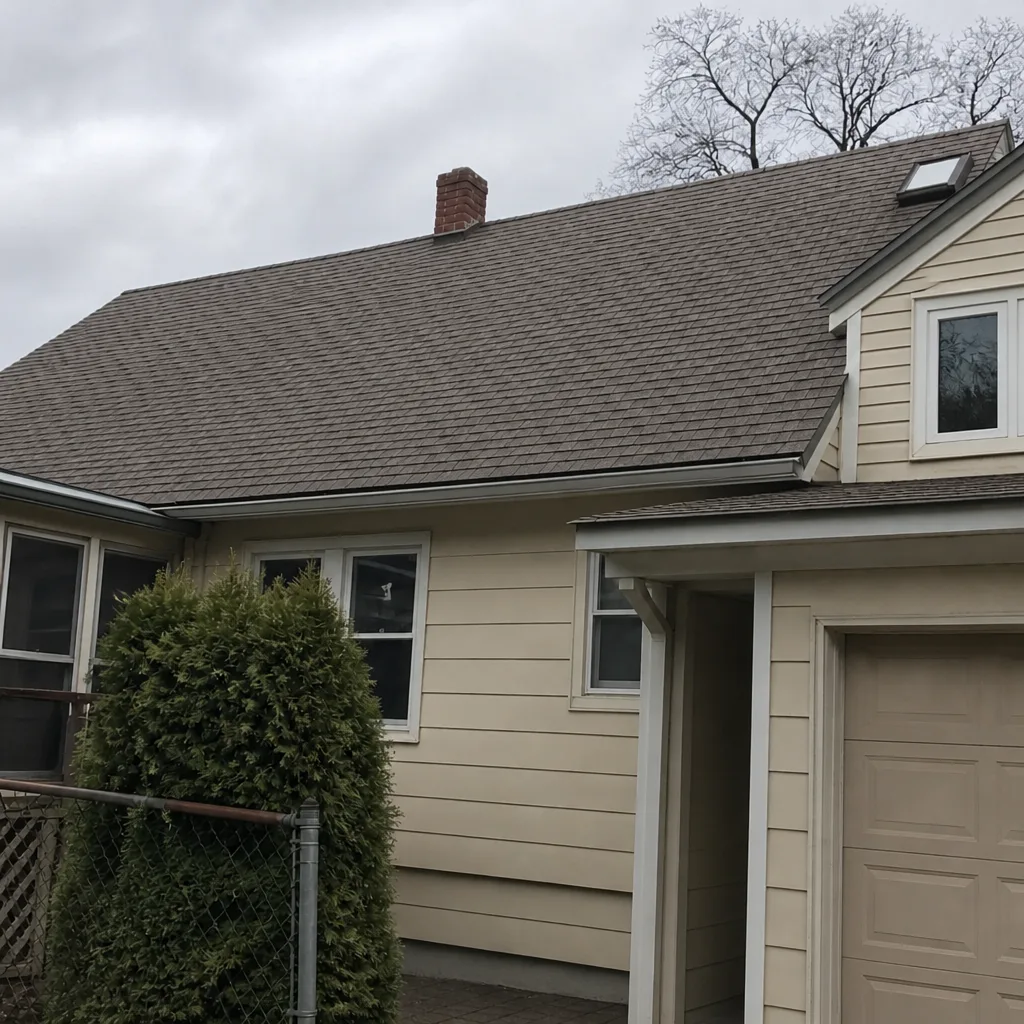
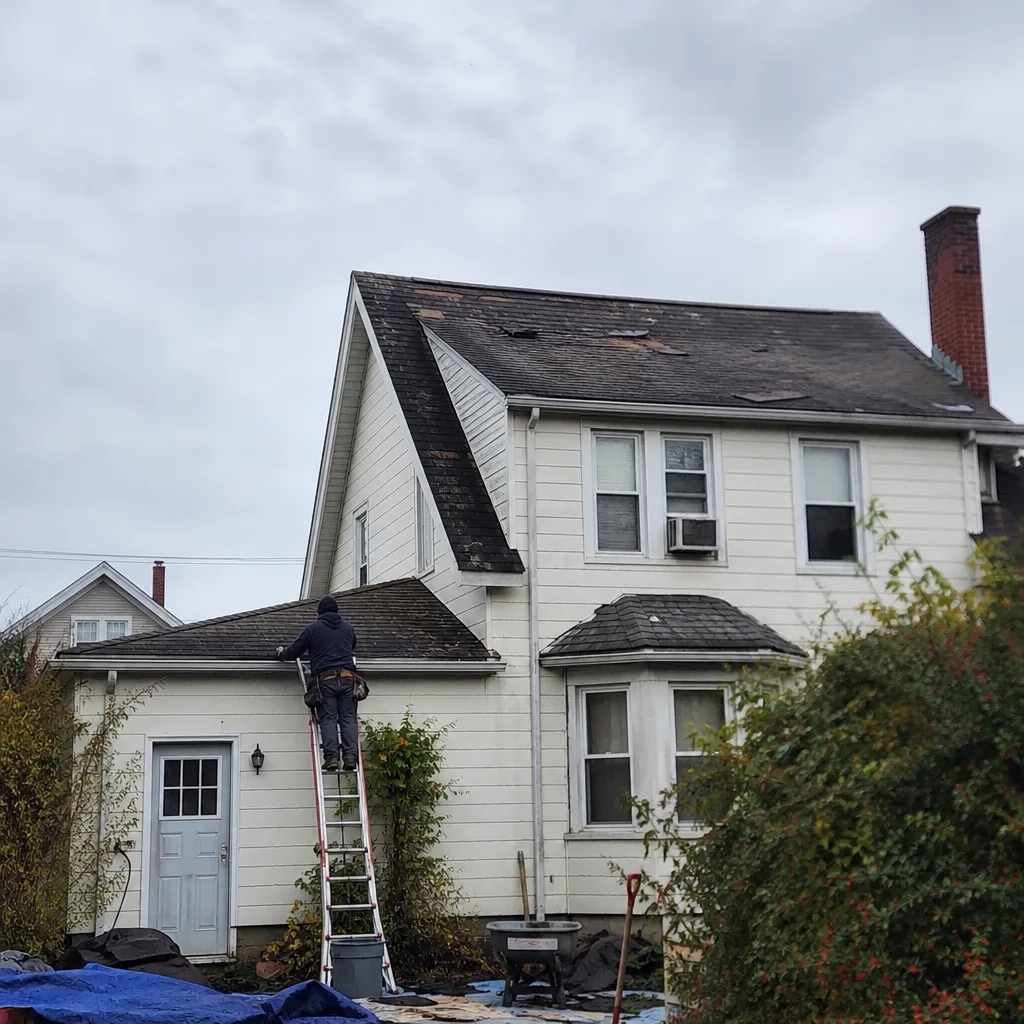
See the difference
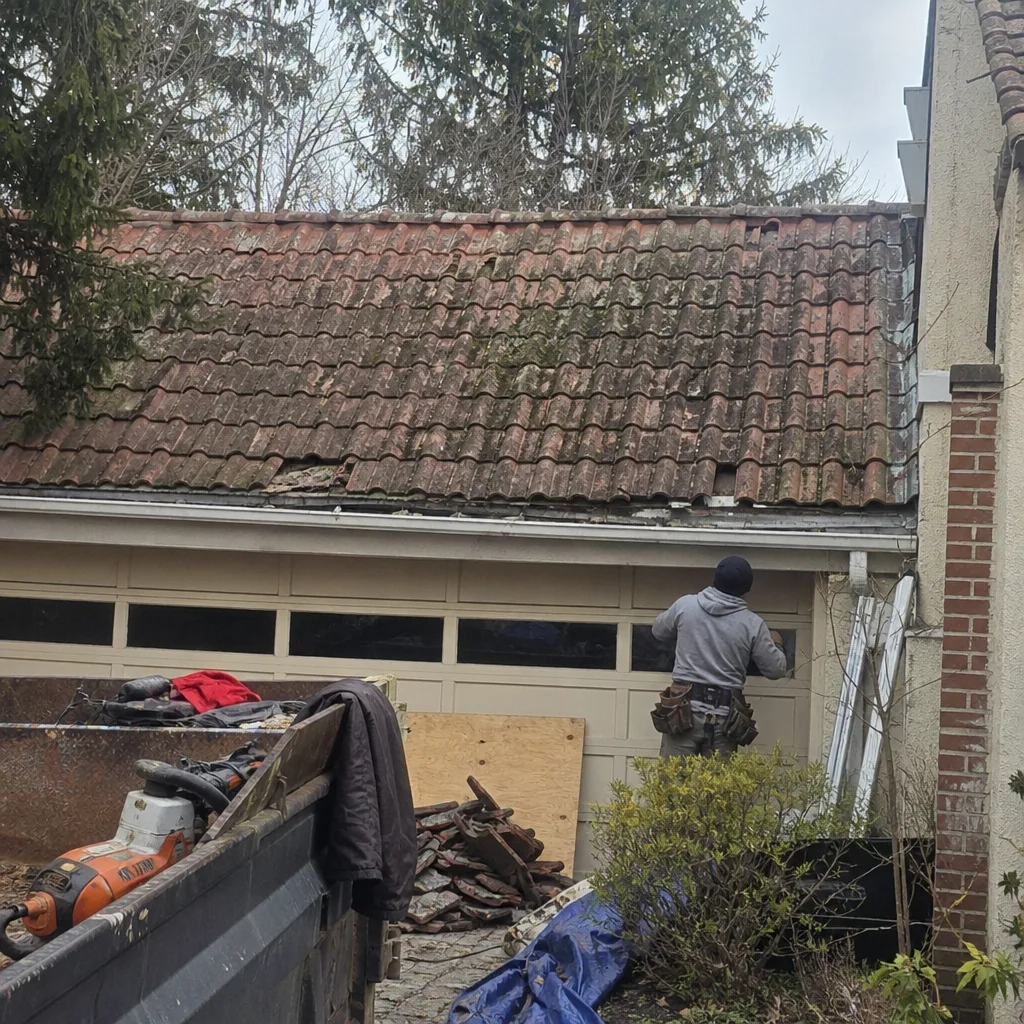 Before
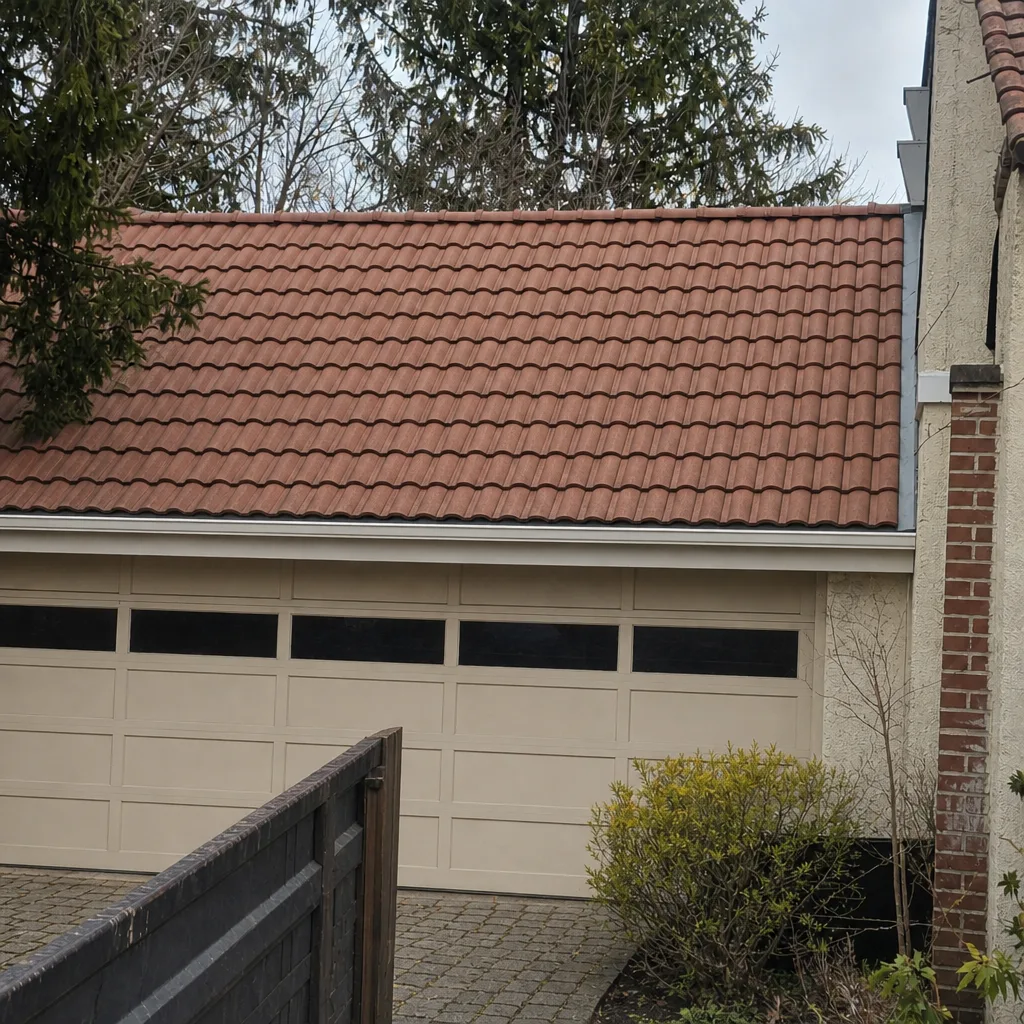 After
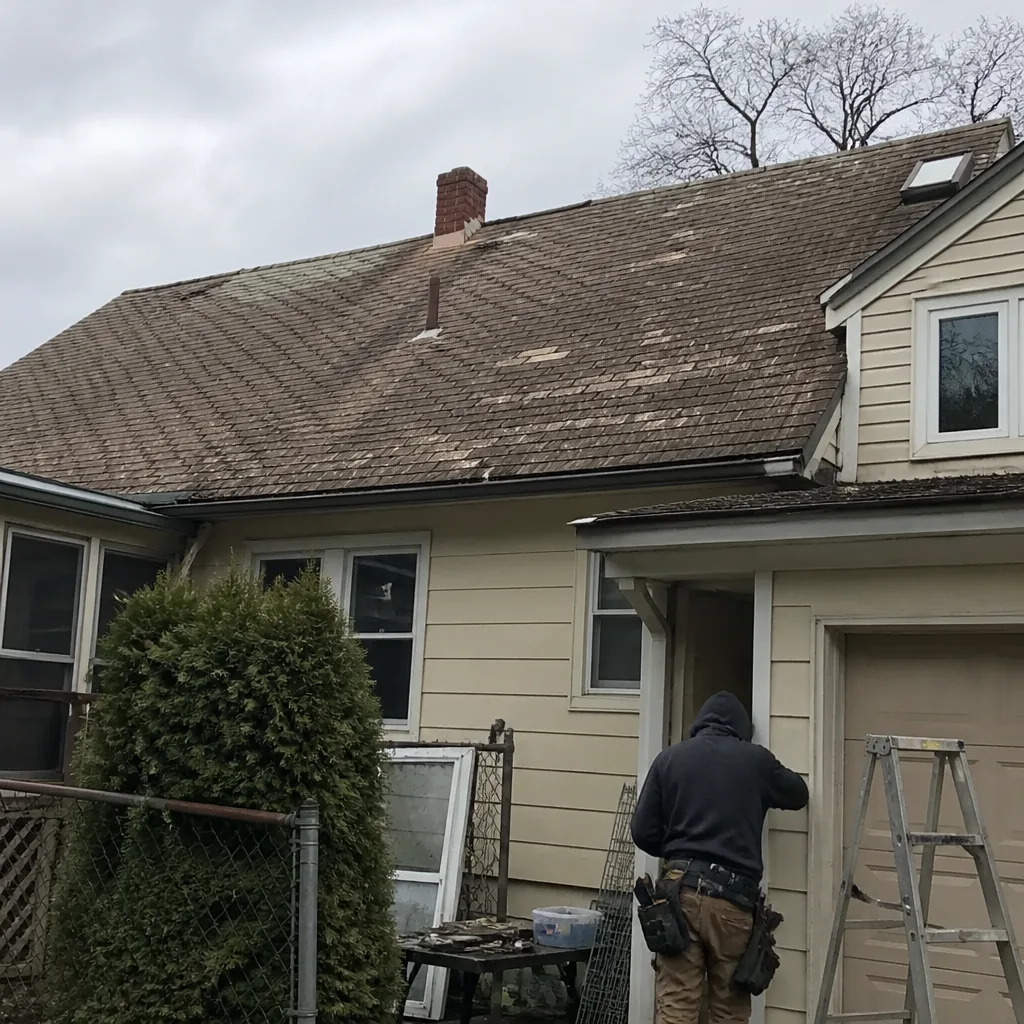 Before
 After
 Before
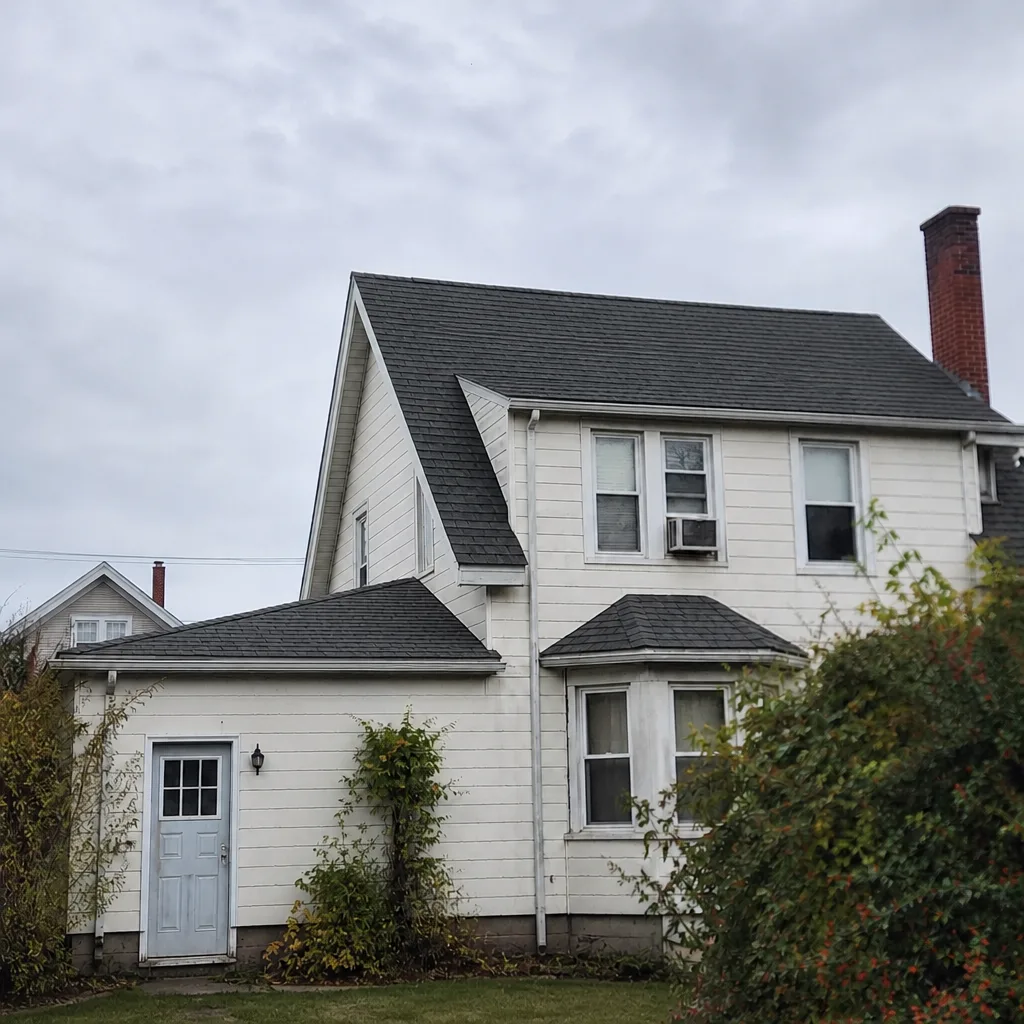 After
When to Call a Professional
Call a professional when any of the following is true: you see interior staining that has appeared or grown over the past season; shingles are visibly lifted, curled, or missing on any slope; you suspect flashing damage at a chimney, valley, or party wall; you’re planning an insurance claim for storm damage and need documented assessment; the same spot has failed more than once; the roof is over roughly fifteen years old and has never had a professional look; or you’re preparing to sell and want a condition report from a licensed roofer. Ashton Roof Repair offers free estimates in Yonkers – call (833) 741-8977. We answer 24/7. Fast dispatch from 7am to 7pm, Sunday through Friday. An honest inspection first, a recommendation second.
Frequently Asked Questions
Once a year, ideally in spring after the winter damage has surfaced. Yonkers sees enough freeze-thaw cycling and storm activity that annual inspections are the minimum for proactive homeowners. If the roof is over fifteen years old, or if you’ve had any prior repairs, twice a year in fall and spring is worth scheduling.
No – and this is where a lot of online checklists get homeowners into trouble. You can safely inspect from the ground and from inside the attic, clear debris at ground level, and document what you see. Anything that requires walking on the roof surface, working with tools on the roof, or repairing flashing or fasteners belongs with a licensed contractor.
Localized damage – a specific flashing failure, isolated lifted shingles, nail pops in a small area – usually warrants repair. Signs that replacement makes more sense include widespread granule loss, repeated failures in the same location, shingle age beyond expected service life, or soft decking discovered under repair. A professional inspection is the right way to know which category you’re in. Call (833) 741-8977 to arrange one in Yonkers.
Yes, in three important ways. Row houses share drainage runs, which means a neighbor’s clogged gutter can cause your eaves to back up. The party-wall flashing on row houses is a shared failure point and one of the most commonly missed inspection details. And steep pitches with narrow rear access on many Yonkers row houses make up-close homeowner inspection impractical, so annual contractor walkthroughs matter more.
Photograph every slope from the ground once each spring, plus any interior stains with a dated note. Keep any inspection reports, repair records, and a running log of storm events. Multi-year records that show the roof’s condition was stable before a specific storm carry far more weight with insurers than a single post-storm photo set.
Premium-tier products like GAF or CertainTeed architectural shingles generally offer longer service life and heavier construction than value-tier alternatives. Value products from brands like IKO or Atlas can be an excellent fit on certain roofs and budgets. The right answer depends on your home’s pitch, your expected time in the home, and your budget. Because we install across seven manufacturers – GAF, CertainTeed, Owens Corning, IKO, Atlas, Tamko, and Boral – we can compare options honestly rather than steering you toward one brand.
Does a professional roof inspection obligate me to buy anything?
No. Our inspection is available as a standalone service, and you’re not required to purchase a repair to get one. The whole point of an honest inspection is to give you information, and then a recommendation you can take or leave. If repair makes sense, we’ll tell you. If it doesn’t, we’ll tell you that too.
The Bottom Line
Roof maintenance on a Yonkers home works best as a sequence, not a list. Pre-winter prep removes what the freeze-thaw cycle would otherwise turn into damage. Mid-winter visual checks catch problems early. Spring inspections document the evidence and set the baseline for next year. The homeowner-safe tasks – attic scans, ground-level viewing, interior stain checks, ground-level debris removal – give you real information. Everything else belongs with a licensed roofer. Repair when repair makes sense. Replace when it doesn’t. And document each year, because a dated record is worth more than any single snapshot when you need it. Call (833) 741-8977 for your free estimate.
Written by the team at Ashton Roof Repair, serving Yonkers since 2012.